
Short Answer First
Grinding usually means metal-on-metal wear in the rollers, bearings, or opener gear. Squealing almost always points to a lack of lubrication or a worn roller rubbing against the track. Popping is most often a cable, spring, or panel issue releasing tension suddenly. Rattling is typically loose hardware or worn rollers bouncing in a track that's slightly out of alignment. The Gulf Coast climate around Baker speeds up all four, since humidity, salt air, and afternoon downpours rust hardware and swell panels faster than they would in a drier part of the country.
Grinding Noise
Grinding sounds like gravel in a garbage disposal, usually happening as the door moves through a specific point in its travel. A technician checks these in order:
- Rollers: Nylon rollers wear down and their bearings dry out, especially with the humidity and dust common here. The fix is roller replacement, which is quick and inexpensive compared to other repairs.
- Track alignment: If rollers are fine but the grinding happens at the same spot every cycle, the track may be bent or pulling away from the wall. Afternoon storms and wind gusts can rack a door slightly over time, bending brackets. The fix is re-aligning or replacing the damaged track section.
- Opener gear: Inside the opener unit, the drive gear can strip, especially on older units pushed hard trying to lift a door that's already struggling. This sounds like grinding at the opener itself rather than along the track, and the fix is gear replacement or, if the unit is old, full opener replacement.
Squealing Noise
Squealing is a high-pitched sound, often loudest at the top or bottom of the door's travel. Technicians check:
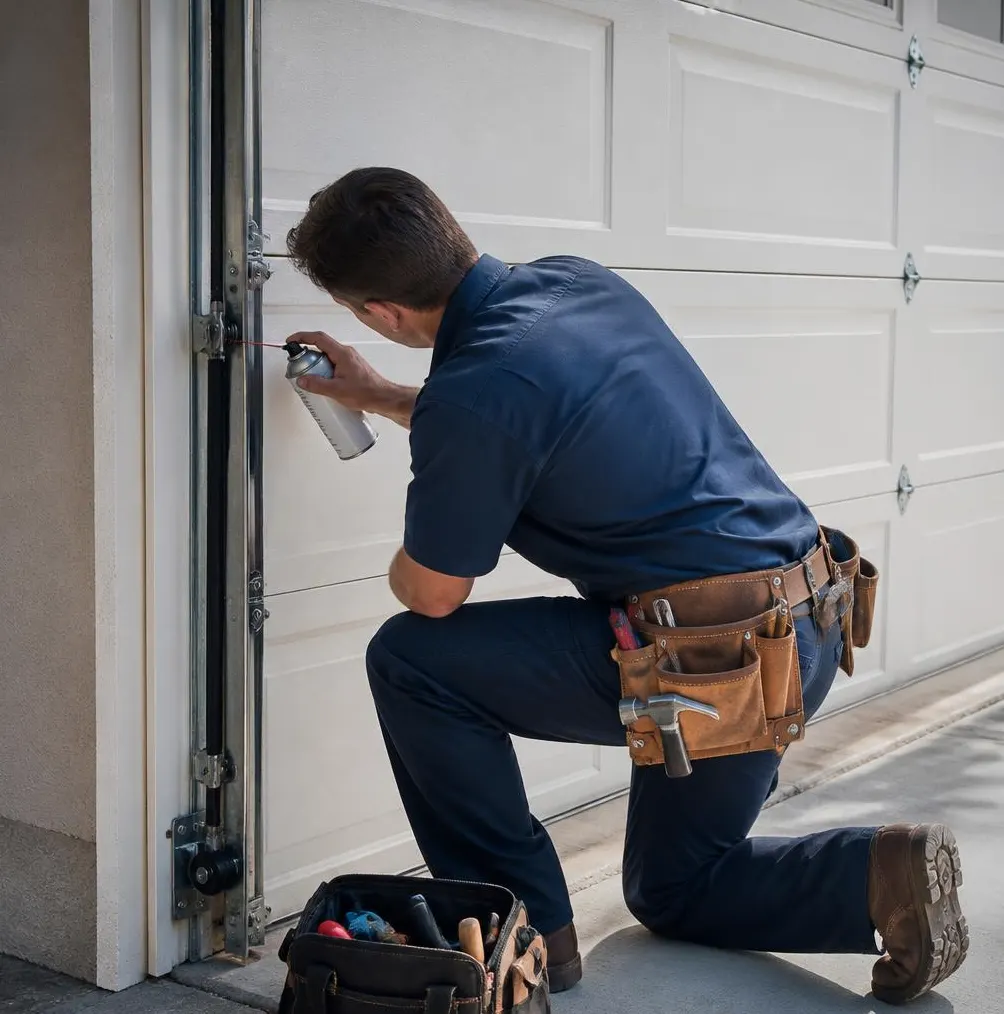
- Lubrication: This is the most common and cheapest fix. Rollers, hinges, and springs need a silicone or lithium-based lubricant every few months in humid climates, since moisture washes away standard grease faster. WD-40 is not a substitute; it's a solvent, not a lubricant, and can actually strip what little protection is left.
- Worn rollers: If lubrication doesn't quiet things down within a cycle or two, the rollers themselves are likely worn or cracked and need replacing.
- Bent track: A squeal that gets worse under load (a heavier door, or one with added insulation) can mean the roller is rubbing against a track edge that's slightly bent. This needs track repair, not just lubrication, or the squeal will come back within weeks.
Popping Noise
Popping is a sudden, sharp sound, sometimes felt as a jolt in the door's movement rather than just heard. This one gets checked with more urgency because it often signals something under tension:
- Cables: A fraying or slipping cable can pop as strands give way. This is a safety issue, since a failed cable lets the door drop unevenly, and it should stop operation until repaired.
- Springs: A torsion spring nearing the end of its life can pop audibly with each cycle as coils shift against each other or the winding cone loosens slightly. Full spring failure is sudden and loud, and often happens right when it's humid out since moisture accelerates metal fatigue in already-stressed coils.
- Panels: On older steel doors, heat and humidity can cause panels to expand and contract, creating a popping sound as they flex against hinges or seams. This is more of a nuisance than a safety issue, but repeated flexing loosens fasteners over time.
Rattling Noise
Rattling is a looser, shakier sound through the whole door rather than one sharp point. The check order here is:
- Hardware: Hinges, bolts, and brackets loosen from daily vibration. This is the easiest fix, a simple tightening pass with a socket wrench, and it's worth doing seasonally before storm season when wind load puts extra stress on every connection point.
- Opener chain or belt: A loose chain-drive opener can rattle against its rail. Adjusting chain tension usually solves it.
- Rollers and track gap: If tightening hardware doesn't help, worn rollers sitting loose in a track with too wide a gap will rattle with every pass. This points back to roller or track replacement.
Why This Matters More Right Now
Heading into the wetter, stormier stretch of the year, rust on springs and cables, swollen panels, and loosened hardware from wind gusts are all more likely. A noise that seems minor in October can turn into a stuck or off-track door during the next heavy storm if the wind-load hardware isn't holding up the way it should.
When to Call Baker Garage Door Repair
If you're hearing popping or grinding, don't wait, those point to parts under tension or load-bearing wear that can fail without much warning. Call for a Garage Door Spring Repair if the popping is rhythmic and tied to the door's movement, or for an Off Track Door Repair if the door is rattling, shuddering, or binding as it moves. For everything else, squealing, light rattling, general wear, a seasonal Garage Door Tune-Up & Maintenance visit before storm season catches most issues before they become emergencies.
If your garage door in Baker, Crestview, or anywhere nearby is making noises that don't sound right, give Baker Garage Door Repair a call. We'll diagnose it on the spot and get it fixed the same visit whenever we can.